
Personal Finance and Investment: A Beginner’s Guide
Handling your money wisely can help you create a more stable financial future.. Whether you are starting your first job, managing a family budget, or planning for long-term goals, understanding **personal finance and investment** can help you make better financial decisions.
Personal finance is not only about earning money. It also involves budgeting, saving, managing expenses, handling debt, and preparing for future needs. Investment, on the other hand, focuses on putting your money into assets that may grow in value over time. When these two areas are managed together, they can support long-term financial stability.
What Is Personal Finance?

Personal finance covers the way people handle their money, spending, savings, and financial plans. It includes everything from daily spending and monthly budgeting to saving for major goals and preparing for retirement.
Some important areas of personal finance include:
Income: The money you receive from employment, business, investments, or other sources.
Expenses :The money you spend on necessities, entertainment, bills, and other needs.
Budgeting: Deciding how to allocate your income toward spending, saving, and important priorities.
Saving: Setting money aside for emergencies and future expenses.
Debt management: Managing loans, credit cards, and other financial obligations responsibly.
Financial planning: Creating a strategy to achieve short-term and long-term financial goals.
A clear understanding of these areas can make it easier to control your finances and avoid unnecessary financial stress.
Why Is Personal Finance Important?
Smart financial habits can help you make better decisions about your money. Without proper planning, it can be difficult to understand where your money is going or prepare for unexpected expenses.
Creating a budget can help you track your income and spending. It can also help you identify expenses that you could reduce or avoid. Building an emergency fund can provide financial support when unexpected situations arise, such as a sudden repair, job change, or major expense.
Personal finance can also help you plan and save for major goals, such as buying a home, funding education, starting a business, traveling, or preparing for retirement.
What Is Investment?
Investment means putting money into an asset or financial product with the expectation that it may increase in value or generate income over time. Unlike ordinary savings, investments generally involve some level of risk.
Common investment options include:
* Stocks
* Bonds
* Mutual funds
* Exchange-traded funds (ETFs)
* Real estate
* Fixed-income investments
Each investment option has different levels of risk, potential returns, costs, and time horizons. Beginners should understand these differences before investing.
Keep in mind that investments do not guarantee profits, and their value may change depending on market conditions.
Saving vs. Investing
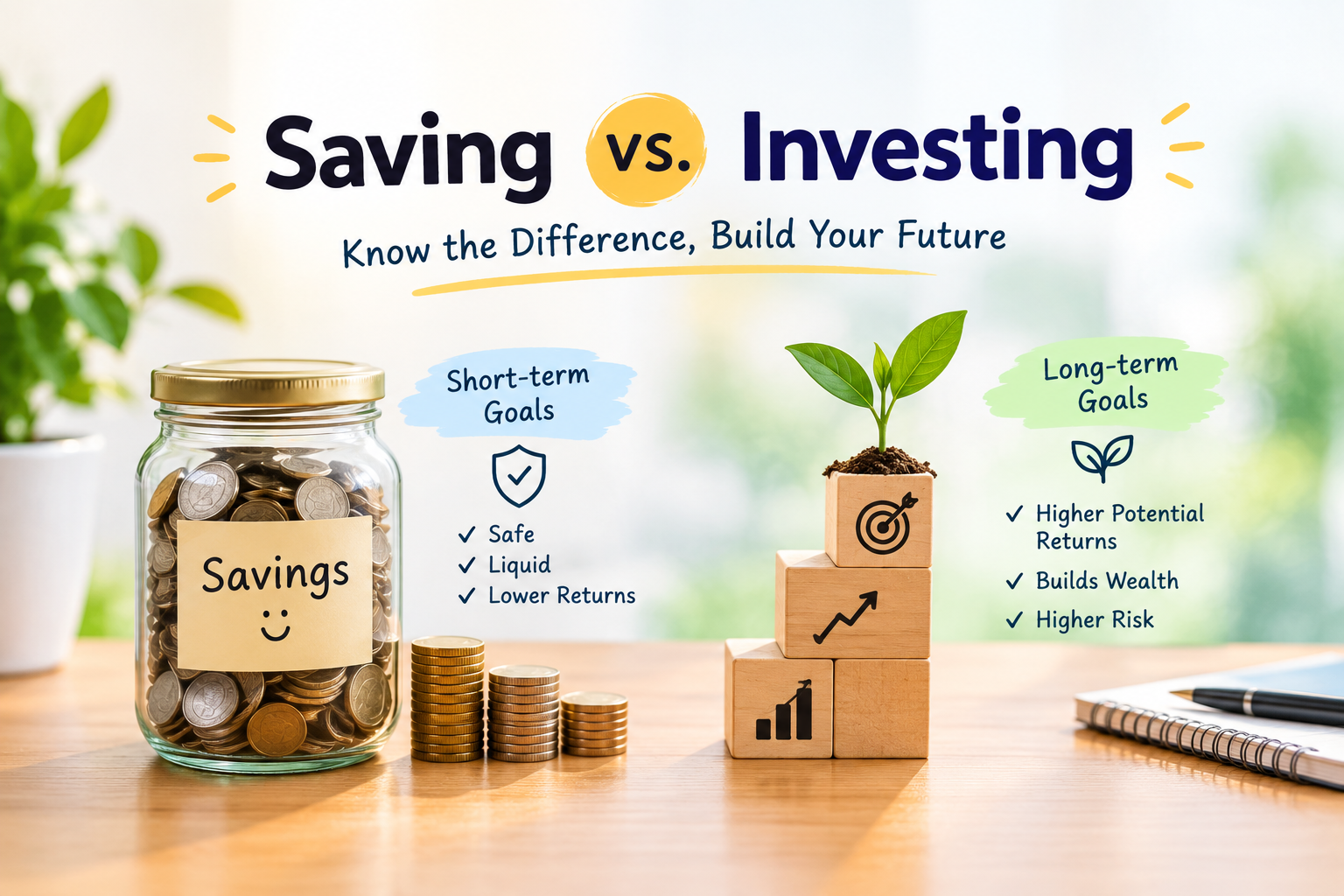
Saving and investing are both essential for financial planning, but each has a different role.
Saving generally involves keeping money in relatively accessible and lower-risk accounts for short-term needs. For example, you might save money for an emergency fund, a planned purchase, or an upcoming expense.
Investing generally involves putting money into assets that have the potential to grow over a longer period. Because investments can fluctuate in value, they may be more suitable for long-term financial goals.
A balanced financial plan can include both saving and investing. A strong financial plan may combine saving and investing. Establishing an emergency fund first can provide greater financial security before taking on investment risks.
How Beginners Can Start Investing
Starting an investment journey does not necessarily require a large amount of money. Begin by assessing your financial position and deciding what you want to achieve.
1. Set Clear Financial Goals
Think about why you want to invest. Your goal could be building retirement savings, purchasing a home, funding education, or creating long-term wealth.
Clear goals can help you determine how much to invest and how long you may need to keep your money invested.
2. Create an Emergency Fund
Before focusing heavily on investing, consider building an emergency fund for unexpected expenses. This can reduce the need to sell investments when you urgently need money.
3. Understand Your Risk Tolerance
Every investment carries some level of risk .Think about how much market fluctuation you can handle and how long you plan to keep your money invested.
Your investment choices should reflect your financial situation, goals, and time horizon.
4. Learn About Different Investments
Take time to understand stocks, bonds, mutual funds, ETFs, and other investment products. Learning the basics can help you make informed decisions instead of investing based on trends or emotions.
5. Diversify Your Investments
Diversification means spreading your money across different investments rather than relying heavily on one asset. It can help reduce the impact of poor performance from a single investment, although it cannot eliminate investment risk.
6. Invest Consistently
Investing regularly can help you stay focused on your long-term financial objectives .Instead of trying to predict every market movement, some investors choose to contribute regularly according to their financial plan.
Common Personal Finance Mistakes to Avoid
Beginners often make financial decisions without having a clear plan. common mistakes include spending more than they earn, ignoring high-interest debt, having no emergency savings, and investing without understanding the risks.
Another mistake is making investment decisions based solely on short-term market movements. Markets can change frequently, so focusing on long-term goals may help investors avoid making emotional decisions.
Managing money wisely is an important skill at every stage of life. Whether you have recently started earning, are planning for a major purchase, or want to prepare for retirement, understanding personal finance and investment can help you make more informed financial decisions.
Financial planning involves more than simply putting money aside. It includes managing income, tracking expenses, reducing debt, building savings, and preparing for future goals. By developing the right habits early, you can create a stronger foundation for your financial future.
Understanding Personal Finance
Personal finance focuses on how you handle your income, expenses, savings, and financial objectives. It covers the everyday choices that affect your financial situation, from paying bills to planning long-term savings.
The main areas of personal finance include:
Managing income
Controlling everyday expenses
Creating a budget
Building emergency savings
Managing debt
Planning for future goals
Preparing for retirement
Making investment decisions
Having a clear picture of your financial situation makes it easier to decide where your money should go.
Why Financial Planning Matters
Without proper financial planning, you may spend money today without preparing for future expenses. A simple plan can help you organize your income and give each part of your money a purpose.
For example, you may allocate some of your income toward household expenses, some toward savings, and another portion toward long-term goals. Reviewing your financial plan regularly can help you adjust it when your income, expenses, or priorities change.
A good financial plan can help you handle unexpected expenses more effectively. An emergency fund may provide a financial cushion when you face an unplanned expense.
What Does Investing Mean?
Investing involves putting money into assets or financial products with the goal of generating growth or income over time. Unlike keeping money in a regular savings account, investments can experience changes in value.
Some commonly known investment choices include:
Stocks
Bonds
Mutual funds
Exchange-traded funds
Real estate
Other financial assets
Each investment option comes with its own level of risk and possible return. Before choosing an investment, it is important to understand how it works and whether it matches your financial goals.
Saving and Investing: What Is the Difference?
Saving and investing both support financial goals, but they play different roles.
Savings are generally used for short-term needs and unexpected expenses. Money kept for an emergency fund or an upcoming purchase may need to remain easily accessible.
Investing is generally focused on longer-term goals. Investments can potentially grow over time, but their values may also decline. This means investing involves risk and requires careful consideration.
A well-rounded financial strategy can combine both saving and investing. Maintaining accessible savings can help cover immediate needs, while investments may support longer-term objectives.
Steps to Begin Your Investment Journey
If you are new to investing, there is no need to understand everything at once. Start with the basics and gradually improve your financial knowledge.
1. Review Your Finances
Look at your income, regular expenses, savings, and existing debts. Knowing where you stand financially can help you decide how much you can comfortably set aside for future goals.
2. Define Your Goals
Identify what you are investing for. Your goals might include purchasing a home, funding education, preparing for retirement, or building long-term wealth.
A specific goal can make it easier to determine your investment timeframe and financial priorities.
3. Build Emergency Savings
Unexpected expenses can happen at any time. Creating an emergency fund before taking on substantial investment risk can provide a financial safety net.
The right amount will vary based on your income, expenses, lifestyle, and individual financial needs.
4. Learn About Investment Risk
Every investment does not carry the same level of risk. Some assets may experience significant price changes, while others may be relatively less volatile.
Reviewing your finances and investment goals can help you make more suitable investment decisions.
5. Research Before Investing
Avoid putting money into an investment simply because it is popular or someone recommends it. Learn about the asset, its potential risks, fees, historical performance, and how it fits into your overall financial plan.
6. Consider Diversification
Diversification involves spreading investments across different assets rather than concentrating your money in one place. It can help reduce the effect of poor performance from a single investment, although it cannot completely remove investment risk.
Money Habits Beginners Should Develop
Strong financial habits can make managing money easier. Start by monitoring your spending and identifying where your income goes each month.
Set a realistic budget that covers essential expenses while allowing room for savings and long-term goals. Try to avoid unnecessary debt and pay attention to high-interest borrowing.
You can also make saving easier by setting aside money regularly. Even when the amount is small, developing a consistent saving habit can help you build financial discipline.
Mistakes to Avoid
Beginners may sometimes make financial decisions without fully understanding the consequences. Common mistakes include spending beyond your income, failing to maintain emergency savings, taking on excessive debt, and investing without researching the risks.
Another mistake is allowing emotions to control investment decisions. Market values can change, and reacting quickly to every market movement may not support a long-term financial strategy.
It is also important to avoid expecting guaranteed profits. Investment values can decline, and previous performance cannot predict how an investment will perform in the future.
How to Improve Your Financial Knowledge
Financial education is an ongoing process. Read reliable financial resources, learn basic investment concepts, understand common financial terms, and review your progress regularly.
As your knowledge improves, you may become more comfortable evaluating financial products and understanding the risks involved. For complex financial decisions, professional advice may also be appropriate.
Conclusion
Understanding **personal finance and investment** is an important step toward managing money with greater confidence. Personal finance focuses on managing income, expenses, savings, debt, and financial goals, while investing focuses on using money to potentially build wealth over time.
For beginners, the process can start with simple steps: create a budget, build emergency savings, understand investment risks, set clear goals, and learn about different investment options.
The goal is not to become financially successful overnight. Instead, focus on developing informed and consistent financial habits that can support your goals over the long term.