
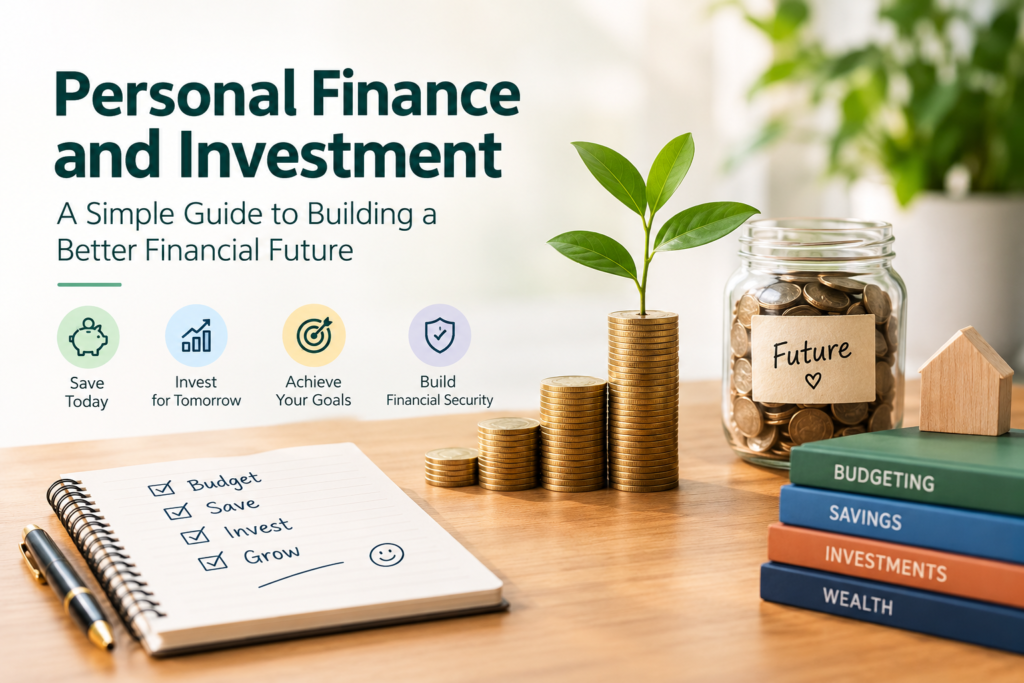
Managing money wisely is an important part of achieving financial stability. Whether you are a student, a young professional, or a business owner, understanding personal finance and investment can help you make better decisions about your money.
You don’t need to be a financial expert to start. Small and consistent steps can make a big difference over time.
What Is Personal Finance?
Personal finance is the process of managing your money effectively. It includes your income, expenses, savings, debt, insurance, and investments.
A simple personal finance plan can help you:
- Track your monthly expenses
- Create a realistic budget
- Build an emergency fund
- Reduce unnecessary debt
- Save for future goals
- Plan for retirement
The first step is understanding where your money goes every month.
Why Is Saving Important?
Saving money gives you financial security. An emergency fund can help you handle unexpected expenses such as medical costs, job loss, or urgent repairs without depending heavily on loans or credit cards.
A good starting point is to regularly set aside a portion of your income. Even a small amount saved every month can grow into a useful financial cushion.
What Is Investment?
 Investment means putting your money into assets with the goal of generating returns over time. Common investment options include:
- Mutual funds
- Stocks
- Bonds
- Fixed deposits
- Real estate
- Gold
Every investment comes with a certain level of risk. Therefore, it is important to understand an investment before putting your money into it.
Saving vs. Investing
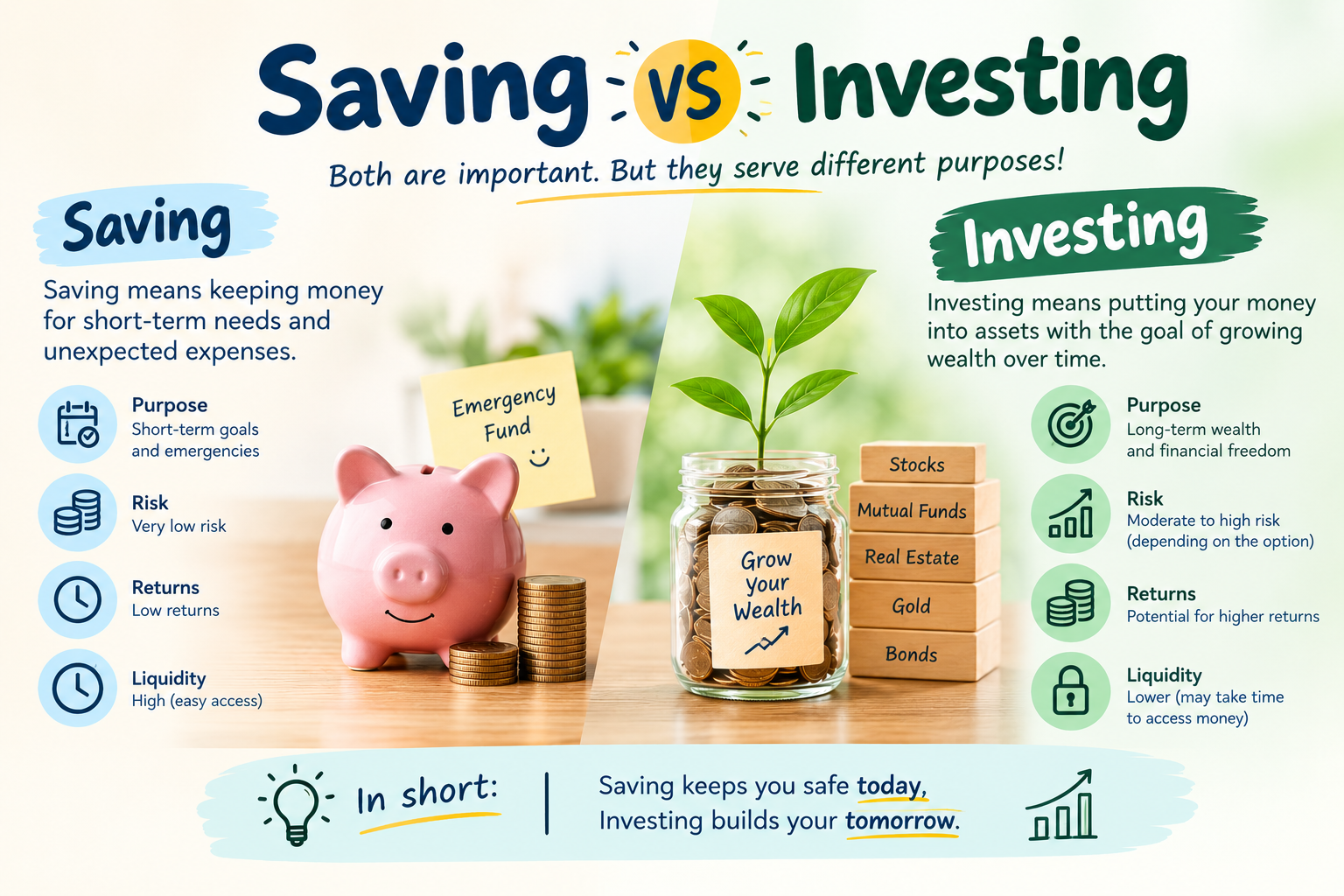
Saving and investing serve different purposes.
Saving is generally useful for short-term needs and emergencies, while investing is usually focused on growing wealth over the long term.
For example, money needed for an emergency may be kept in a relatively accessible savings option, while money intended for a long-term goal may be invested according to your risk tolerance and time horizon.
Start Investing Early
One of the biggest advantages an investor can have is time.
Starting early allows your investments more time to potentially grow through compounding, where returns can generate additional returns over time.
You don’t necessarily need a large amount of money to begin. Developing a habit of investing regularly can be more important than waiting until you have a large amount available.
Create a Simple Financial Plan
A basic financial plan can follow these steps:
1. Know your income: Understand how much money you receive each month.
2. Track your expenses: Identify essential and unnecessary spending.
3. Set financial goals: Decide what you are saving or investing for.
4. Build an emergency fund: Keep money available for unexpected situations.
5. Manage debt: Prioritize expensive debt and avoid taking on unnecessary loans.
6. Invest regularly: Choose investments that match your goals, time horizon, and risk tolerance.
7. Review your plan: Your income, expenses, and goals can change, so review your financial plan periodically.
Final Thoughts
Personal finance is not about becoming rich overnight. It is about making informed decisions and developing good money habits.
By budgeting carefully, saving consistently, managing debt, and investing for long-term goals, you can take greater control of your financial future.
Start small, stay consistent, and keep learning. Your future financial self will thank you.